Treating Red foxes and Coyotes for Sarcoptic Mange using Bravecto

Symptoms:

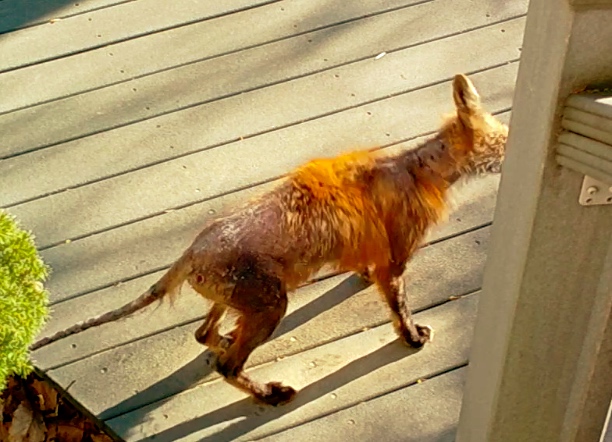
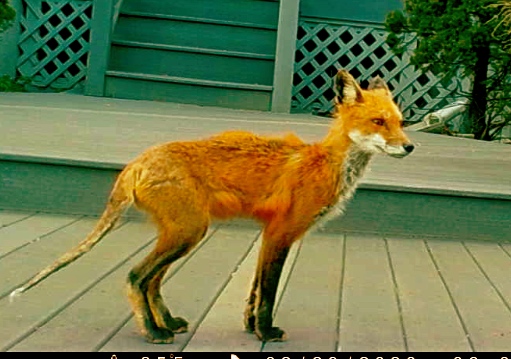
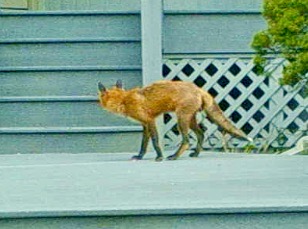
Fox out during the day, but also laying in the sun, acting lethargic, eating under bird feeders, thin fur on tail, thin fur on body, crusty eyes, scratching a lot, shaking head as though there is a bug in their ear. Swollen, scaly feet, laying in baled hay, going into culverts. A limp in hind legs. Red foxes are not nocturnal, so there must be combined symptoms, not just being out during the day.

Baby foxes, especially those younger than 5 weeks of age hide signs of mange well, as the puppy coat doesn’t fall out, it is thick and you have to part it and look very closely. They will die quickly

What you can do right away:

Start conditioning the fox by putting out some dry cat food or dog food and hot cooked chicken in a spot where the fox will find it easily. 

If possible, turn home surveillance toward the feeding station or use a trail camera to see who eats the food, and if a fox, what time.  Foxes tend to keep a schedule. 

Treatment:

Quickest, easiest, most effective:  3-month Bravecto chew

A single dose of the three-month Bravecto (fluralaner) Chew for a 10 lb. dog wrapped in two Greenies hickory smoke flavor two capsule size pill pockets.  Form into a round meatball that can easily be tossed to the fox from a window, car, or left at a feeding station once fox is conditioned.  These meatballs are also easy to pick back up and try again later in case the fox doesn’t eat it.

Bravecto Chews are much more economical when a larger size is divided. Use a razor blade, cut at room temperature.  Wrap up the remaining chew in original container, then Ziplock bag. It can be refrigerated.  Take advantage of promotions and sales!

88-123 lb. will treat 12 foxes

44-88 lb. will treat 8 foxes

22-44 lb. will treat 4 foxes

9-22 lb. will treat 2 foxes.

Don’t refrigerate Pill Pockets, it will dry them out. Store in a Ziplock bag or covered container room temp.

By Prescription in the USA.  Most veterinarians won’t provide for a wild fox.  If you get some for your dog, chances are you can have enough to cut off enough for a 10 lb fox and have enough left over to protect your dog from fleas, ticks, and mites for three months.

Purchase Bravecto over the counter outside of the country without a prescription at :     bestvetcare.com

Troubleshooting tips

How do I make sure the fox gets it? This is why we use conditioning with food – dry cat food and hot cooked chicken.  Put it out in the early morning to reduce raccoon, opossum, skunks, etc from getting it. Use a camera, foxes will keep a schedule. If the fox is in a culvert or under a shed or deck, you can pt the medication-laced meatball underneath or inside the culvert with it.   Also, meds can often be tossed from a window directly to the fox. Meds can be tossed from a car window to the fox.   Pick them back up and try again if the fox gets frightened and leaves the area, not eating the meds.   

There is more than one fox.  How do I target the sick one?  Mange is very contagious, so they should all be treated if they’re coming for the same food.  Do the best you can, timing is the key. Foxes tend to keep a schedule. 

Should I trap the fox and relocate it? Relocating without treating will infect a new population. The fox in question will also die.  What if it has kits depending on it? Treat, and then if needed, use scare balloons to discourage fox from coming back.

Should I trap the fox and take it to a wildlife rehabilitator: What if it has babies? Also, stress from capture can cause a sudden downward spiral from shock and a quick death.  The fox has the best chance of recovery in its own environment.

Can my dog catch Sarcoptic mange from the fox? Your dog can catch Sarcoptic mange from the grass, like the fox did.  In order to catch it from the fox, it would have to have physical contact i.e. roll on a dead fox. Protection through the Spring and summer is a good idea. Bravecto, Nexguard , Simperica, Trifexis, Seresto collar all protect dogs from Sarcoptic Mange mites.  However, these meds don’t all necessarily cure mange in the fox, and multiple doses are generally necessary, i.e NexGuard needs three doses, one every two weeks for 6 weeks. 

Will the Bravecto kill my cats if they eat it?  Bravecto for dogs and cats have identical ingredients and are the same strength.  The fox is the same average size as a cat  (10 lbs)

What else can I use to put the medications in?  Anything that the fox can eat in a single bite.  Foxes love sweets too.  A marshmallow or glazed donut hole work nicely.  Some people say to use  hard boiled eggs, but these are too large and must be broken up to be eaten. The meds may fall out and go uneaten.   

How can I tell if my fox is getting better?  Fur may not grow back until fall, so look for spring in the step, clear eyes, being more skittish, and not being seen as much, less scratching and ear shaking  
Albino Red Fox

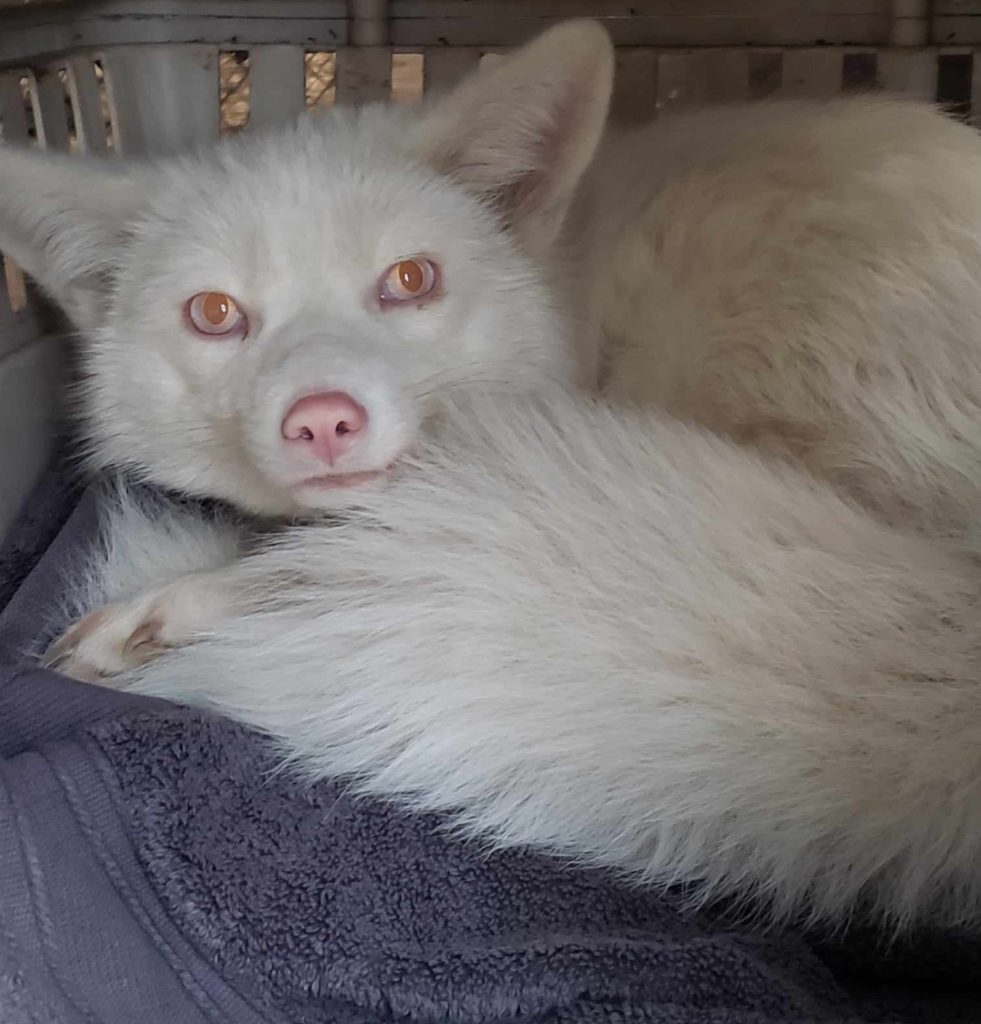
Albino Red foxes are very rarely born in the wild in New York. This young male was having a difficult time, but we didn’t know why until we were able to catch him. He was extremely thin and had pneumonia. We treated his pneumonia and put weight on him, but were concerned about releasing him until we figured out why he was in such poor condition in the first place. After observing him closely on a camera and doing some simple tests, we came to realize that he has a hearing deficit. This would explain his poor condition, as Red foxes need to hear in order to locate their prey. As a little guy, he may not have been able to hear his momma calling to let him know she brought home dinner. He couldn’t hear insects, worms, frogs and small mammals scurry across the ground. We also noticed that he is very sensitive to the sunlight and is more nocturnal than any of the Reds foxes we have ever had. Because of this, the only time we really get to see him is when we use a motion-activated camera with night vision. Though fox ranchers commonly create white foxes and variations of white through breeding programs, a naturally occuring Albino fox is very rare in the wild, so we feel very blessed to have been able to save this little guy! He is the first we have ever seen or heard of in our over 30 years of working with wild Red foxes. We are unsure at this time if or when he may be released back to the wild. Much more evaluation has to be done

Fox World book is out!

I am so excited that my friend Jack’s book “Fox World” is finally out! We met years ago when he contacted me about saving a beautiful Red fox who had Sarcoptic mange. Together we devised a plan to heal this fox, and the fox repaid him with the experience of a lifetime. The book just came out, and I promise you, it is magnificent. It would make a wonderful Christmas gift for your nature-loving friends. https://www.foxworldnow.com/book.html

Fox World: 500 Miles of Walks and Talks with an Old Fox - Russell, Jack

I Think I Saved This Fox’s Life

Wow! Thank you Jim from New Jersey for sharing your wonderful story about saving this fox with Sarcoptic mange using the guidelines we created and posted on our website. Please check out our article about using Ivermectin to heal You truly did save this foxe’s life, and are an inspiration to others who also want to do something for a fox in need <3 <3 <3 <3 <3 Check out our facebook page as well

I Think I saved this fox’s life.

I live in Northern New Jersey in a small town only about 30 minutes from New York City. Because my property backs up to a 1,400 acre “Green Acres” preserve, seeing lots of wildlife in my yard is not at all unusual.

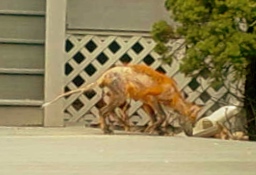
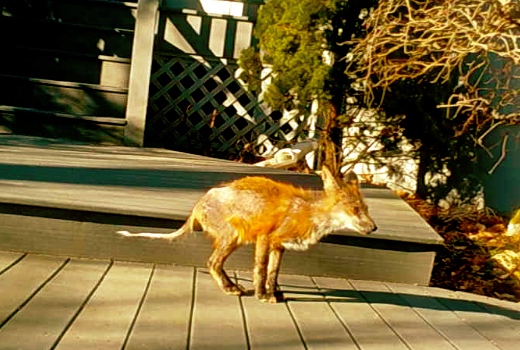
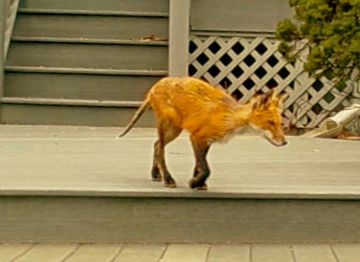
In early January this year, a red fox showed up on my front deck.  The previous Spring I had a female and her three kits living in an abandoned woodchuck burrow under this deck so seeing a red fox out there not a surprise. What did surprise was how sick he looked (severe loss of fur and numerous sores on his body).

I did some research and found an article on your web site, “Treating Sarcoptic Mange in Red Foxes”.  Following the advice in the article, I ordered the Agrimectin and the recommended syringes.  I began leaving a small amount of dog food and some hamburger twice a day to attract him to the same spot.  Every third day I would inject the dog food with the Agrimectin.  “Mangy”, as I named him, came like clockwork.  I also set up a couple trail cams to make sure it was Mangy that was eating the food.  By mid February I could see a definite change with all the bare spots filling in with fur (though his tail still looked a bit like a “rope”).  By the end of February, even his tail started to show signs of fur growing on it.  I stopped the medicine around this time but still left him some food so that I could monitor his recovery and make sure the mites did not come back.     

He looked quite healthy through most of March.  I then stopped feeding him so that he wouldn’t become dependent on my food and would hunt for himself.  He still came back at least twice a night or early morning to check for food for several weeks.  Now he comes maybe every three or four days. 

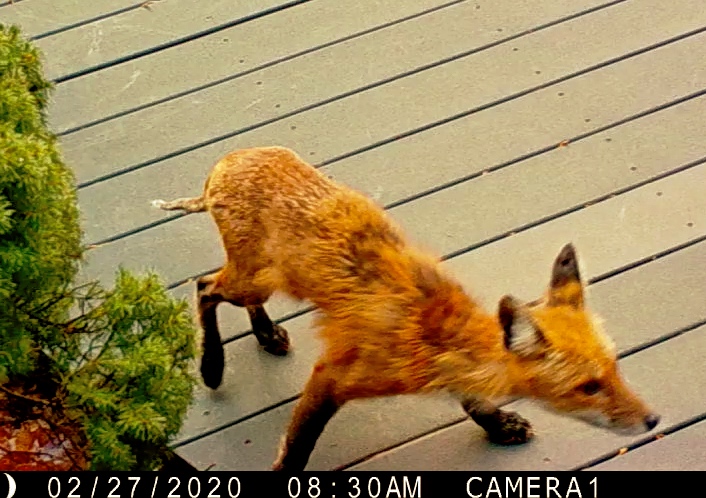
I’m sending a series of pictures.  The first five are from early January when I first began to film him.  The second five are from mid to late February.  The last is from April 20.  They are screenshots from videos so they are not as crisp as a regular photo might be.  I think I save Mangy’s life.  Thank you for posting that article.

Jim from New Jersey

January 2, 2020 coing for food daily, receiving Ivermectin, and this fox really wants to live!

January 10, 2020 Already the redness of his skin is resolving, sores starting to close and heal
Febuary 1, 2020 REceived another treatment, feeling a LOT better, Than you Jim!
Feb 27, 2020 Still getting meds, killing any mange mites that may have hatched as treatment continues
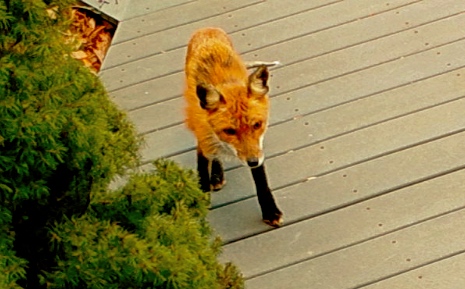
February 28, 2020 a spring in his step!
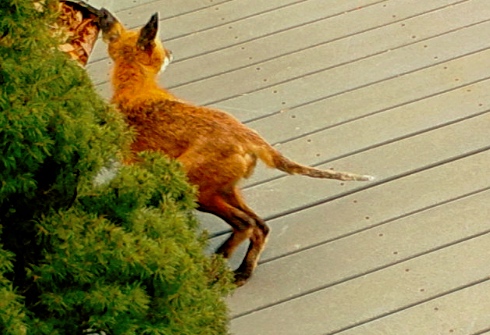
February 2020 skin is healthy, fur is growing back !
Wow! looking great! growing his fur back slowly
April 2020, looking and feeling very healthy and relieved, ready to move on! Thank you, Jim!

Couple in Wisconsin Successfully treat a red fox for Sarcoptic mange

Scarlet
We love success stories about people helping wildlife.  We received this beautiful letter from a couple in Wisconsin who successfully treated a Red fox with Ivermectin as per instructions we have written online. Great job, Dan and Ann in Wisconsin!!
“My wife and I have had red foxes in our yard for about 5 years now. We love seeing them and helping them out with food in the winter, especially during breeding time and after, and while the female carry’s the kits.

This last year, however, a nearly dead fox showed up. Late stages of mange. This is the first we had seen this one and it wasn’t one of our regular foxes. My wife was a vet nurse for 18 years and we hate to see any animal suffering.

Our pack which consisted of a male, female and 3 kits all came down with mange. One kit died and I buried him myself. The mother was really bad, eyesight was going and losing her fur and 1 kit as well. I could see the male had it, but he was holding strong and the second kit wasn’t as bad as the first. 

All the rehab places wanted them trapped so they could provide topical treatment and our vet wasn’t too keen on any prescription. I searched online for alternative methods and couldn’t find anything. 

One day the female and one kit stopped showing up, and the male with 1 kit still came around. I was sad and desperate to find a way to save them. The male who would almost eat out of my hand disappeared and 1 kit was left. She was obviously infected as well. So I went back online and your article showed up in my search.

I immediately ordered from Amazon and started treating the remaining fox about 8 weeks ago. Hoping she would be healed and prepared with a fresh coat of fur by the time it turned cold. 

Today, I have a beautiful, healthy fox with a luxurious coat and healthy appearance. We supplement whatever food she hunts with raw eggs and uncooked chicken breast. I even save my cut offs from venison for her, which she obviously loves.

I just wanted to thank you for the information with which we saved her life. I wish I could have saved the others, especially the male as he was a regular visitor year round. I am hoping this little fox will attract a healthy mate and help regrow the family of foxes we enjoy watching.

Thank you very much. I think your article has saved a lot of foxes that otherwise would have died from mange. 

Dan & Ann”

Unfortunate Fisher

Fisher

Fisher

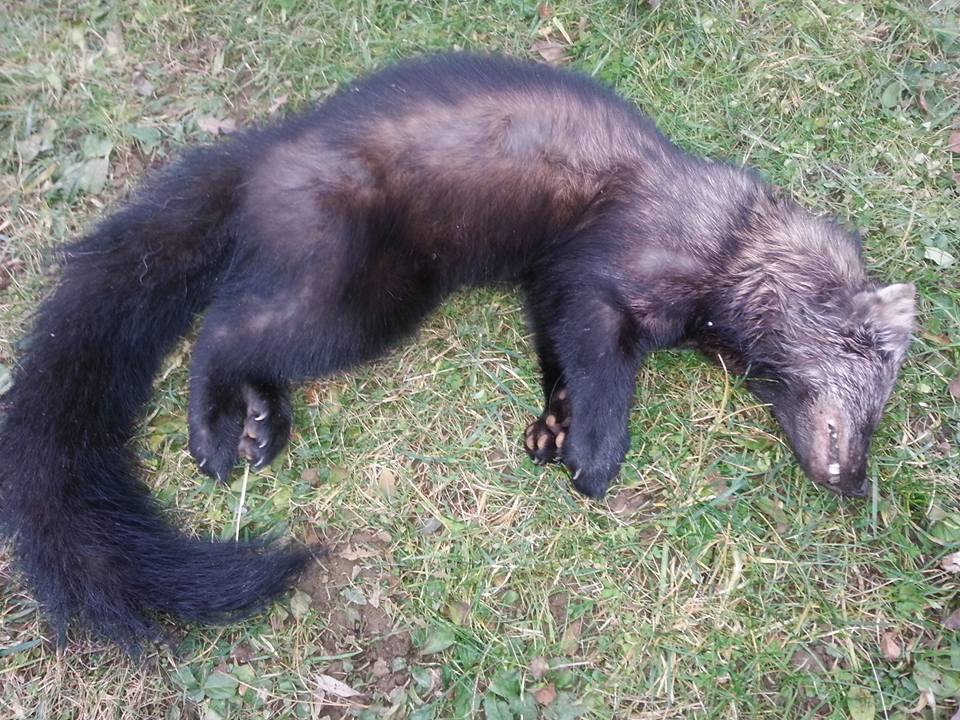
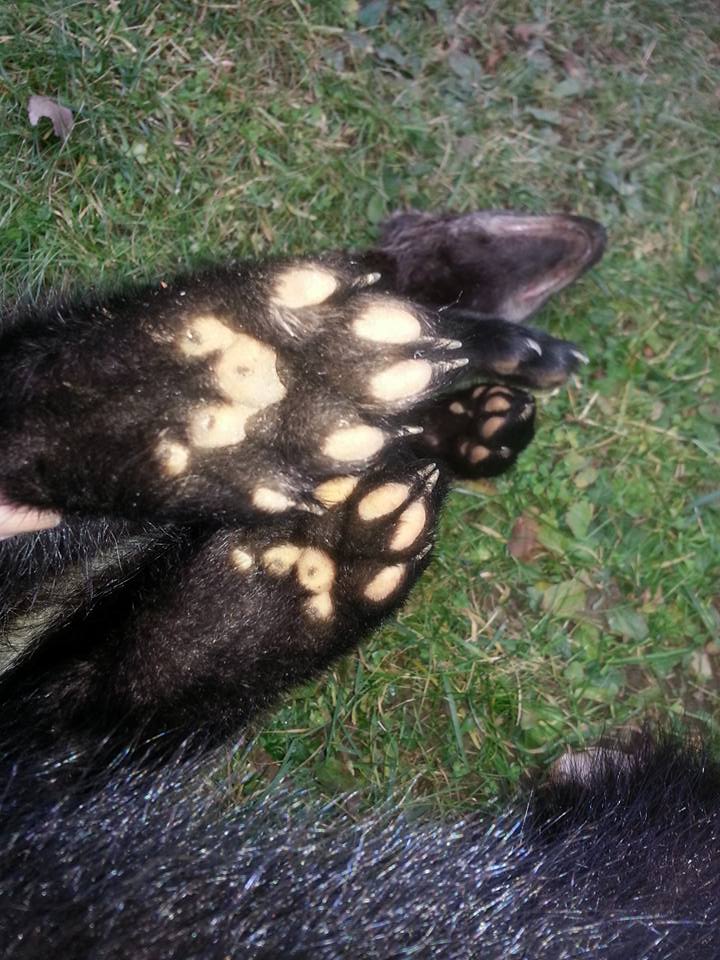
This female Fisher was very unfortunate. A tree fell on her in the woods and she was trapped for days. A man walking his dog found her, well, his dog actually found her. They called me, but were unable to find it again last night because it got dark. This morning they went out, found the Fisher and it was still alive. Unfortunately, the dog ran up and killed her before they could stop him. I have her body and am going to save her in my freezer and try to get a permit and have her mounted so I can use her for education.

Fishers are incredible athletes!  Look at her feet!

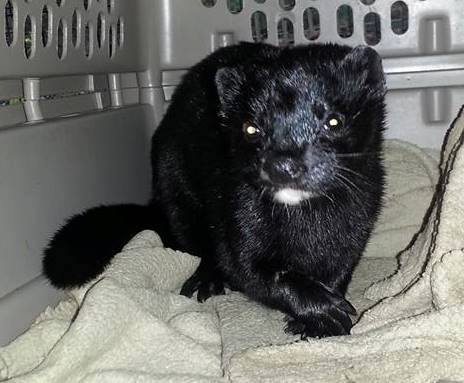
Raising and Releasing Our Weasel

Weasel

Weasel

Weasel

The weasel was released over the weekend. I’m sorry I don’t have pics of the release for you, but she was VERY wild and very elusive and I must respect that.

She entered life in the wild via a process called “Slow Release” where she is given the opportunity to familiarize herself with the surroundings in the safety of her cage, and then the door is opened and she is allowed the freedom to come and go as she pleases. Food, water and a familiar shelter for her were provided for her to come back to as needed. I won’t reveal the location, but it is excellent weasel habitat, loaded with mice.


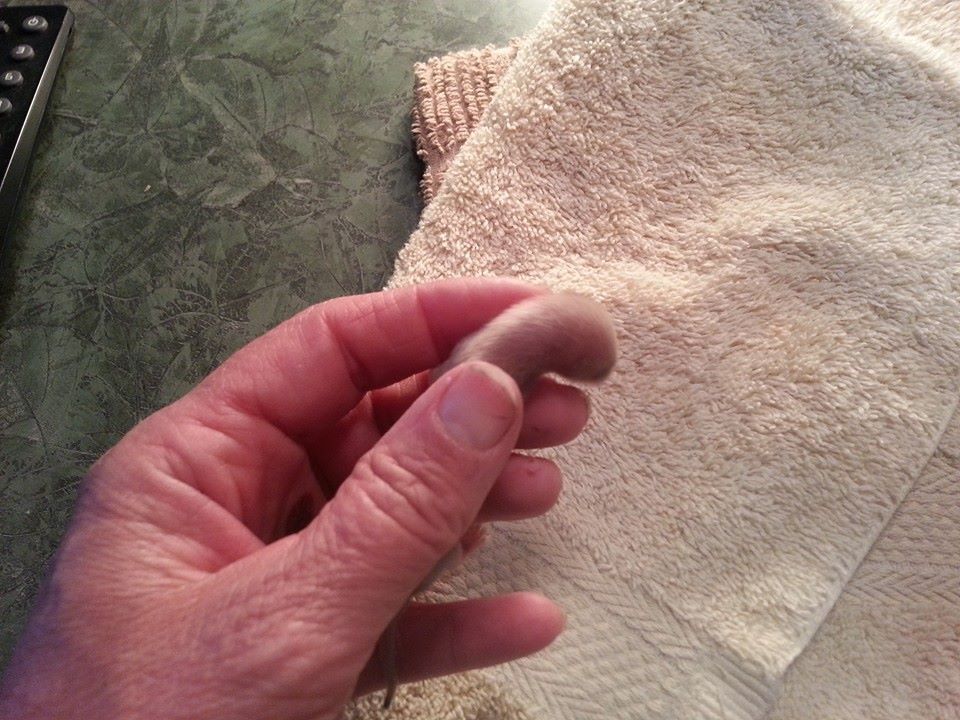
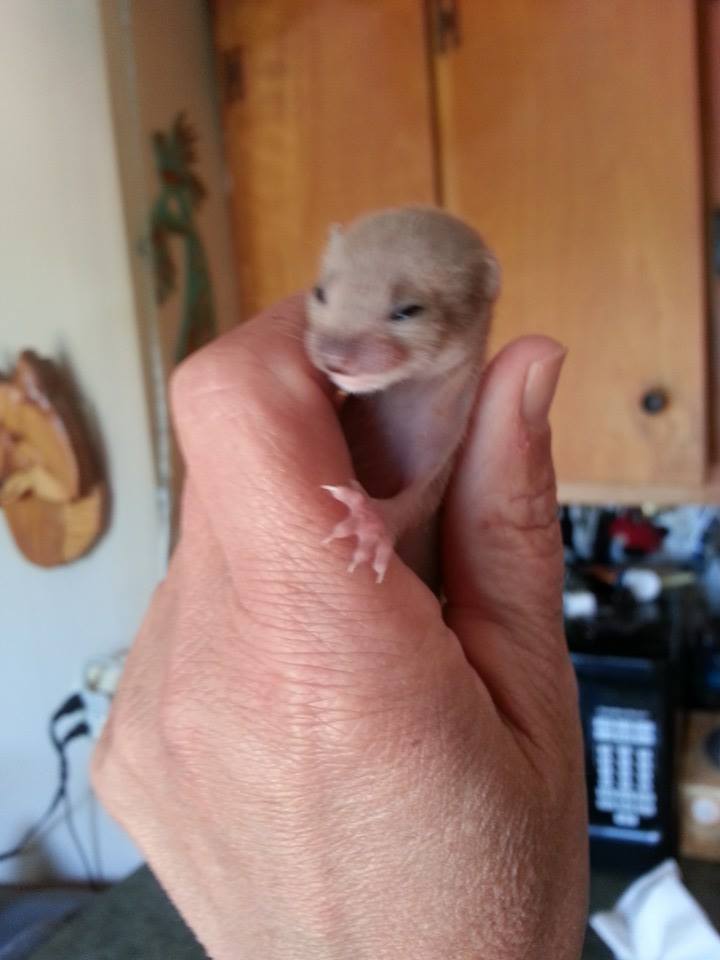
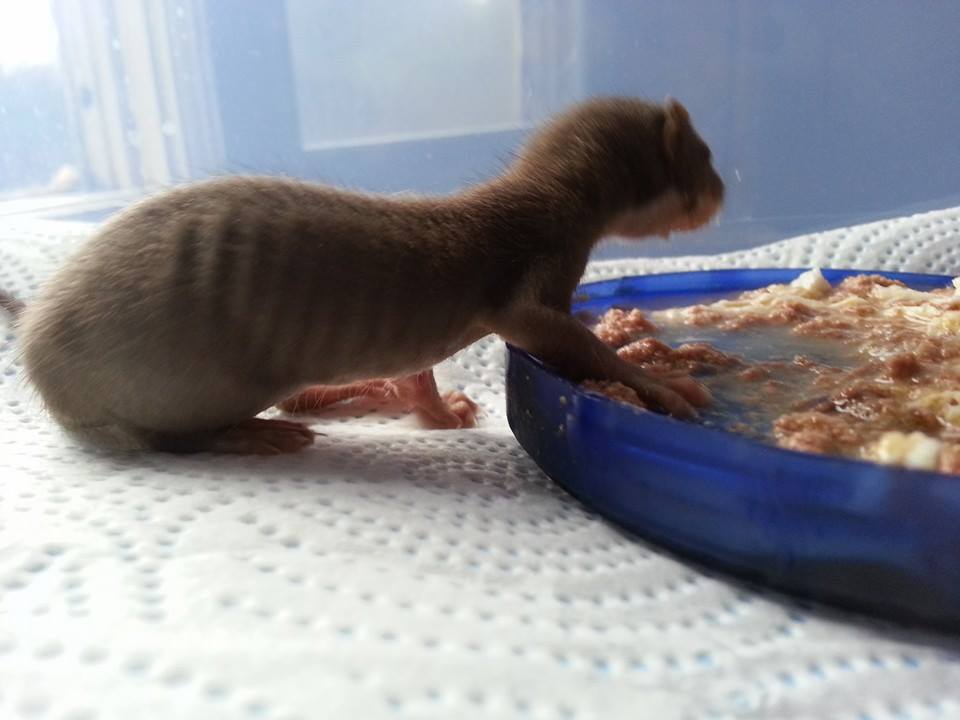
Above are a couple photos of her being raised. As she became a young adult, her natural instincts began to reveal themselves and she did not want to be handled and began to become more secretive in her movements. Though followers would have loved to see her all grown up, my responsibility to her is greater, so that is why there were no more photos of her. I appreciate your understanding this.

One of the things that you will find we do NOT do here at Fox Wood is exploit our wildlife. We don’t get the donations that result from the exploitation of displaying animals in uncomfortable public settings or putting them on public display here at our facility. What we do here is strictly for the animals, not for the money, not for our ego’s. That is what sets Fox Wood apart. We rely only on donations from people who understand what we do and why we do it.

Fawns

Fawn

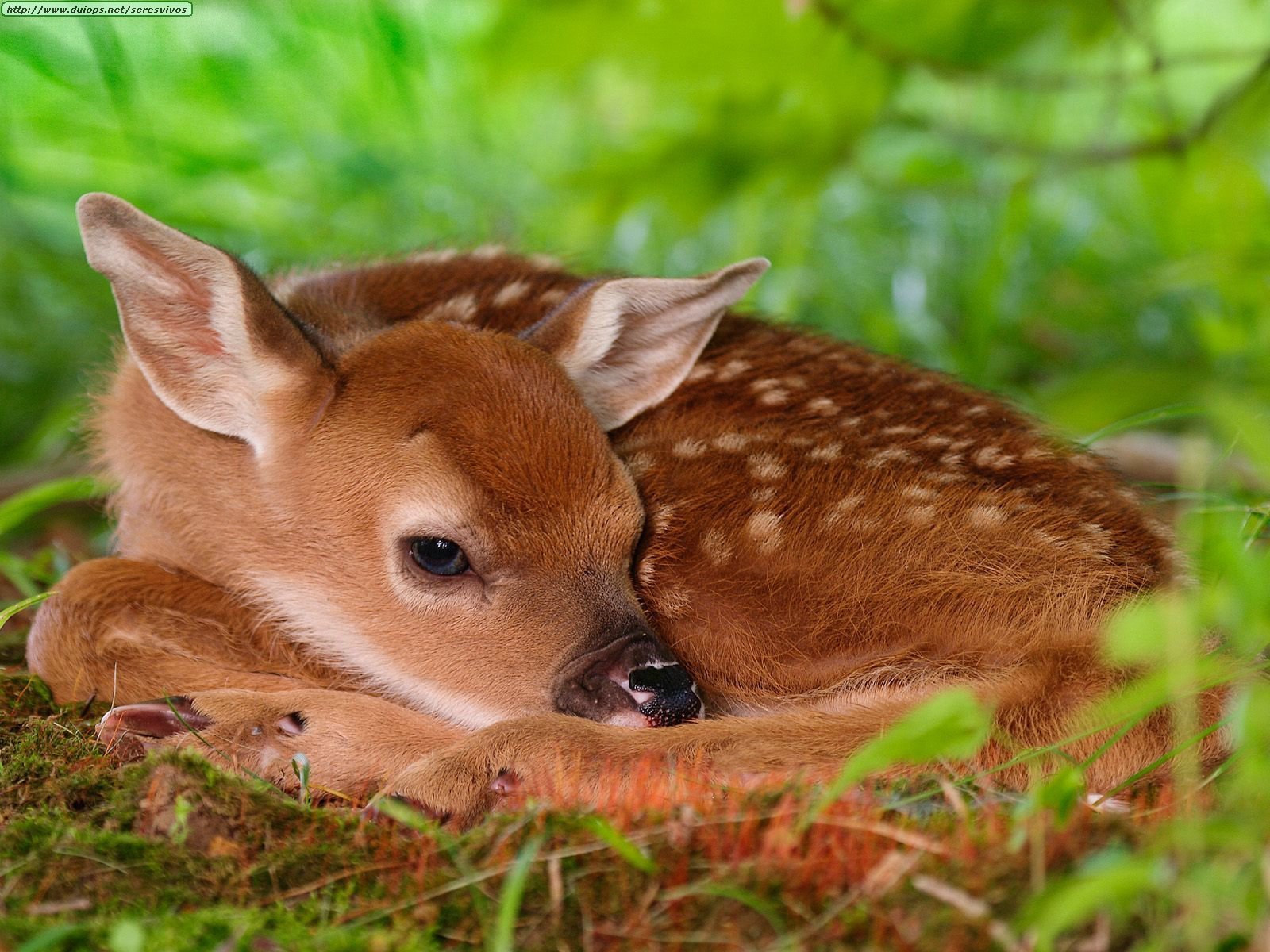
In May and June Fox Wood receives many calls from well meaning people who are worried about an “abandoned fawn”. It is important to know that fawns are born with a natural defense mechanism. When fawns are first born they have no appealing scent to predators and they have an amazing ability to lay perfectly still and quiet, allowing the fawn to hide in plain sight. The mother deer does not stay with her fawn because she does not want to alert predators to her baby’s location. She comes back to her fawn throughout the day and night, but only when it appears there are no humans or other predators around. She feeds and thoroughly cleans the fawn to erase any scent they may have. Instinctively the fawn knows that when mom leaves, it must lay very still and silent in the location mom left it. Since the fawn does not move and no mother is present, people often think it is abandoned. Because of this, healthy fawns are often “kidnapped”.

A doe may keep her babies in the short grass area, near your home, in your garden, etc. for the first 3 days, not in the woods where the predators are hunting. These first days a fawn can’t outrun a predator, so they go limp when someone picks them up. They are not dying, they are playing “possum” so you will not be interested and put them down. With twins, a doe will leave one baby in one place, and then 300-500 feet away, she will leave the other. She then goes off to the closest hiding area and forms a triangle so she can watch over both, unseen, until it is time to feed again. She will not let them travel with her until they are old enough to keep up with the herd, but she is never far away.

There are times when a fawn will not express normal fawn behavior. We will usually be concerned when we get a call about a fawn that is wandering around crying out. This is not natural behavior as it attracts predators. Diarrhea, flies, falling down, limping, twins together and obvious wounds are all signs of a fawn that needs help. If you suspect a fawn needs help, or just want to make sure a fawn is OK, you can contact us or your local  Conservation Office for direction. In closing, remember the fawn that is lying still in your yard or garden is just nature’s way of giving us one more reason to smile. The fawn will leave on its own in just a couple of days, so take a picture and leave the baby for its real mother